
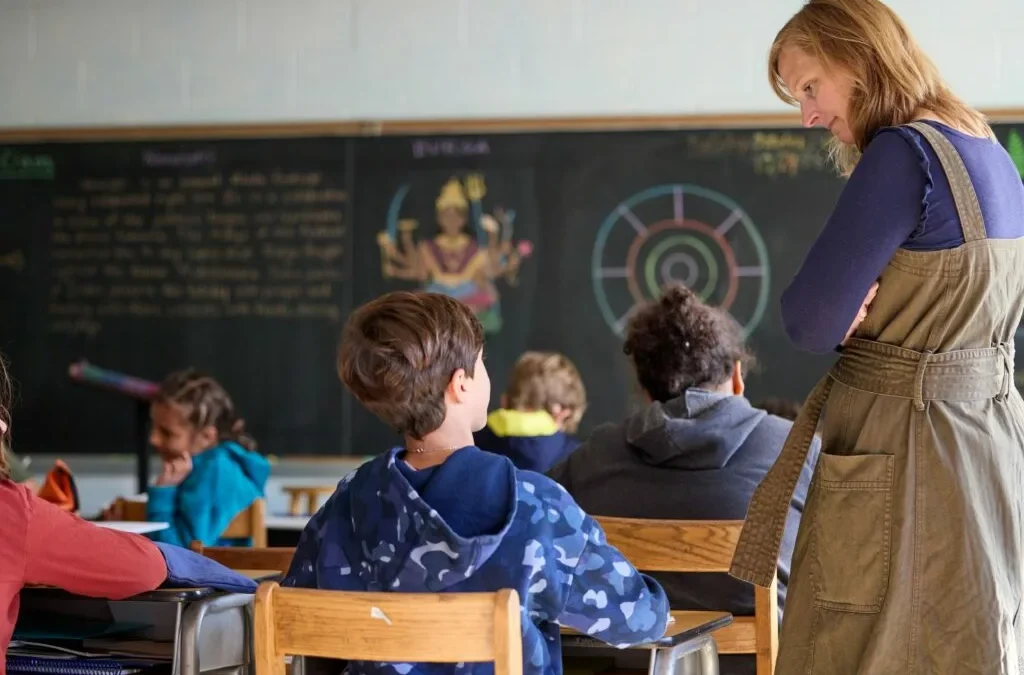
When teachers grow professionally, students succeed through an ongoing cycle that improves both groups. Teacher growth creates positive classroom effects that lead to better student outcomes. This paper examines how educator development improves student outcomes and highlights its essential role in educational systems.
Teacher Growth: The Foundation of Student Success
The continuous development of educators’ professional skill sets constitutes teacher growth, leading to improved instructional techniques, broader educational competencies, and greater teaching expertise. The educational expansion extends beyond new techniques or technological acquisition, as it establishes a perpetual mindset of learning and growth among educators.
Teachers who participate in purposeful professional development programs learn to create stimulating instructional materials, strengthen their classroom command, and adapt to diverse student needs. Tactical enhancements enable teachers to create classrooms that welcome all learners and boost their academic motivation and self-assurance in achieving success.
The Impact on Classroom Environment
The classroom is the most visible location where teacher development has its effects. Professional development helps educators build the skills to create learning-friendly educational spaces. These teachers master behavior management and use technology to improve teaching quality and develop instructional methods that meet diverse student needs.
A teacher with knowledge of differentiated instruction transforms classroom content into personalized lessons that provide the best possible learning conditions for every student. The tailored teaching method increases students’ interest and drive, resulting in better academic performance.
Enhanced Instructional Practices
Teachers’ professional progress leads to improved teaching methods, which directly improve student learning outcomes. The educational proficiency of teachers who participate in professional development enables them to create lessons that meet curriculum requirements while being challenging and relevant.
Teachers who have completed project-based learning training can design lessons that foster critical thinking, collaboration, and creativity among their students. The combined effect of such tasks enables students to grasp educational concepts more deeply while teaching them valuable skills for addressing real-world challenges, such as problem-solving and teamwork.
Building Strong Teacher-Student Relationships
Student achievement relies heavily on favorable interactions between teachers and their students. Educational professionals who continue their professional growth develop superior abilities in building positive relationships with their students. Educators who have Stanley Habus’ reflection experiences develop skills in communicating effectively, providing beneficial feedback, and demonstrating authentic student care.

These relationships cultivate classroom trust and a sense of belonging, which are essential for their personal and intellectual growth. Students who receive support and value from their teachers become more confident in taking risks and asking questions, and fully participate in their learning activities. These principles apply to students of all ages and backgrounds, from elementary school students to young adults attending vocational trade schools.
The Practice of Developing Growth Mindsets within Students
Teachers who possess a growth mindset demonstrate a better ability to teach students the same mindset. Academic abilities grow when students dedicate themselves wholeheartedly to developing their skills rather than accepting their abilities as unchangeable fixed attributes.
Educators who model and teach growth mindsets help learners transform obstacles into developmental opportunities rather than ego-threatening situations. Through this mindset shift, students can use failures for educational purposes while maintaining persistence and working toward ongoing improvement.
The Role of Feedback in Teacher Growth
Teacher growth depends heavily on feedback, as this practice reveals both the skills educators excel at and the areas they should develop further. Teachers who accept feedback from peers and mentors, and students use this information to enhance their teaching methods.
The feedback process enables teachers to develop skills to give students high-quality feedback that supports learning and development. Teachers provide effective guidance to students through detailed feedback, showing them their areas for improvement and how to achieve better results.
Addressing Equity and Inclusion
Education requires teacher development to effectively address equity and inclusion in the classroom. Educators with expanded knowledge of student diversity requirements develop better abilities to construct learning environments that serve all learners.
Equity-focused professional development enables educators to learn effective methods for recognizing bias and combating prejudice, as well as for implementing diverse instructional perspectives and providing equal educational opportunities for all students. TopTradeSchools.com, an online resource for aspiring trade and vocational school students, highlights institutions that focus on teacher and student diversity.
The Long-Term Impact on Student Outcomes

Teacher development has enduring effects on educational achievement because it shapes both students’ academic progress and their personal development. Educational success under supportive teaching leads students to develop an enduring passion for learning beyond school.
The skills students acquire in these learning spaces prepare them for success in higher education and in professional life. Educators develop students into adaptable, resilient professionals by focusing on critical thinking, creativity, and collaboration, helping them succeed in the dynamic world.
Conclusion
Students’ educational achievements are significantly enhanced when teachers develop their professional capabilities. Teacher professional development leads to classroom environments that are more exciting, supportive, and welcoming for all students. The learning environment strengthens when teachers develop professionally, leading to better academic outcomes and emotional health, and a lasting interest in education.
Educational excellence requires essential investments in teacher development, as these investments provide the foundation for success. Schools should establish initiatives that support teachers, as these programs provide a direct path to student achievement. A comprehensive educational strategy that supports teacher development and student achievement will be critical to advancing education beyond 2025 and ensuring students reach their full potential.
