
A simple evaluation won’t cut it. Teachers need support. That is a big difference, and good coaching gets it.
Imagine this. A teacher walks into a feedback session feeling judged. She shuts down. But when a teacher walks in feeling coached and supported, she opens up. Actually, tone changes everything. Good coaching creates that second kind of situation. It is the type of conversation that leaves the teacher feeling energized. Not the other way around.
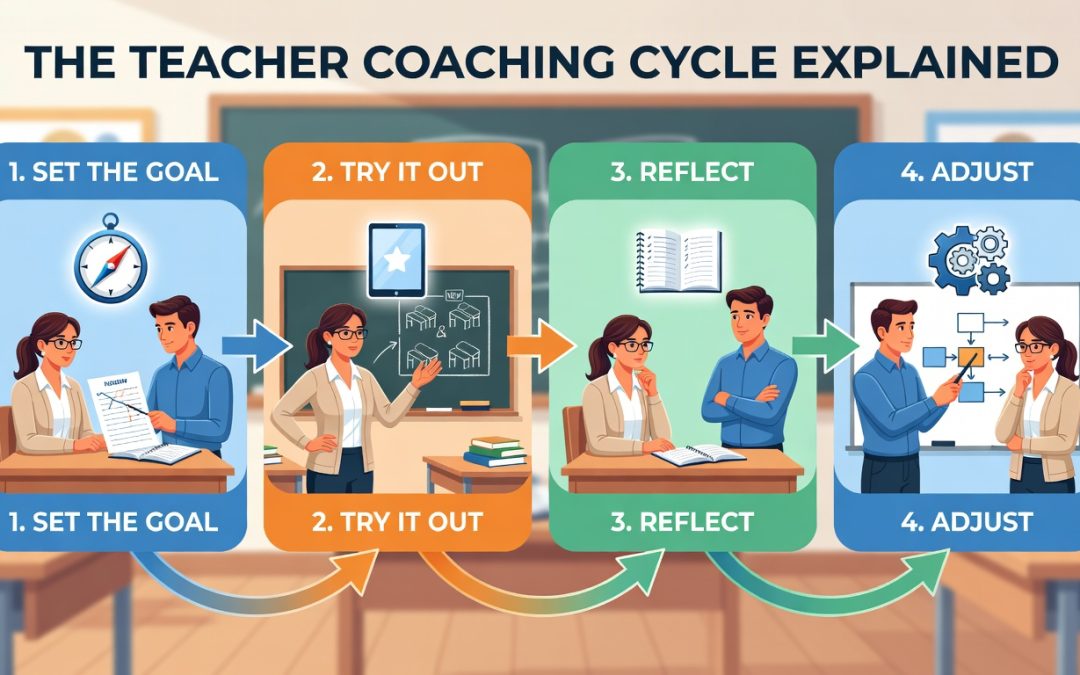
The coaching cycle around here consists of four simple steps: set a goal, try it, reflect, and adjust. That’s it. But every single step is extremely important.
Set the Goal
This is where everything starts. The coach and teacher sit down together. They figure out where the teacher is right now. Not in a “you’re failing” kind of way. More like a map-it-out conversation: where are you now, and where do you want to go?
They look at a shared rubric or framework. This gives everyone a shared language. Then they figure out where the teacher stands. Are they just starting out? Somewhere in the middle? Or have they gotten pretty good at it? From there, they pick one clear goal. One. Not five. Not a long list of things to fix. Just one thing to focus on. It also helps to schedule the next check-in right away. That way, the goal doesn’t drift off and get forgotten.
Try It Out

This step is all about action. The teacher proceeds with their action plan. They will test a new strategy or tool, or change their classroom approach.
However, before jumping in, the coach and teacher discuss possible barriers. They will narrow their action plan to address only matters within the teacher’s sphere of control. No blame, no venting about the system. Just practical stuff they can act on. If a teacher starts to blame their students or head down a bad path, the coach gently steers the conversation back. A simple question like “What could you do differently in that moment?” works way better than letting frustration run the show. Coaches use little phrases called sentence stems for exactly this. They redirect the talk and keep things moving in a good direction.
Some teachers feel lost or low on energy. That is fully normal. A coach who asks the right questions can help uncover the heart of the problem. Then they can face it together and find a way through.
Reflect
After getting your hands dirty, it is time to stop and analyze what went down. What do you take away from what went well? What did not go anywhere? What was the unexpected takeaway? These are all valid questions.
This is the stage where real potential for growth is activated. The teacher narrates what they observed. The coach is quiet and poses questions to the teacher that trigger deeper thinking. There is no Number One or Number Two, or even Grading. There are no positions, just two colleagues wanting to get to the bottom of the matter. This also helps teachers to reconnect with their “why” again. Why did they step into teaching? What matters most to them? That purpose can bring life back to a teacher who feels stuck or burned out.
Adjust
Now the teacher and coach figure out what to change. Maybe the goal needs a small tweak. Maybe the approach needs a fresh angle. Or maybe things went well, and the teacher is ready to push a little further.
This step might look like:
- Watching another teacher model a skill
- Co-teaching alongside the coach in the classroom
- Sitting in on a mentor teacher’s lesson
- Starting a brand new coaching cycle with a fresh goal
The teacher drives this step. The coach supports. The teacher says what they need and when they’re ready. No pressure. Just support.
Why This Cycle Works
Effective coaching alters the way teachers develop. This isn’t a form you fill out and submit at the end of the year. This is an ongoing dialogue. Every cycle is an improvement on the prior one. With time, the accumulation of growth becomes easier to identify.
Teachers often leave the profession when they feel unsupported. This cycle provides teachers the ability to set a goal, implement, reflect, adjust, and repeat. That is how long-term change takes place: one conversation at a time.
