
A Teachers Best Friend
Life Coaching for Teachers!
Empowering Educators to Thrive, Not Just Survive
Maybe you want to apply for a promotion, a new position, or an award, but you just need some support and help to do it. Let’s talk! Schedule a 15-minute chat with me to discuss how I can support you in your journey!
Our Services at a Glance

Workshops & Group Coaching

Consulting for Schools

One-on-One Coaching

E-Courses

Teacher Circles

For Teacher Leaders
From Survive to Thrive Teacher Program
The From Survive to Thrive Teacher Program is an opportunity for you to be part of a collaborative, positive, empowering group of like-minded teachers facilitated by a professional life coach (that’s me!). So think of it as the cathartic power of relating to a colleague after a long tough day combined with the encouraging accountability of a coach that keeps you looking forward instead of stagnated in negativity!
Here are the details:
- A small group setting (4-6 teachers max)
- Meeting virtually (via phone) from anywhere across the country
- Once a week for one hour (we want to keep momentum driving but not take too much of your busy teacher time!)
Latest Updates From Our Blog

The Ripple Effect: How Teacher Growth Impacts Student Success
When teachers grow professionally, students succeed through an ongoing cycle that improves both groups. Teacher growth creates positive classroom effects that lead to better student outcomes. This paper examines how educator development improves student outcomes and highlights its essential role in educational systems.
Teacher Growth: The Foundation of Student Success
The continuous development of educators’ professional skill sets constitutes teacher growth, leading to improved instructional techniques, broader educational competencies, and greater teaching expertise. The educational expansion extends beyond new techniques or technological acquisition, as it establishes a perpetual mindset of learning and growth among educators.
Teachers who participate in purposeful professional development programs learn to create stimulating instructional materials, strengthen their classroom command, and adapt to diverse student needs. Tactical enhancements enable teachers to create classrooms that welcome all learners and boost their academic motivation and self-assurance in achieving success.
The Impact on Classroom Environment
The classroom is the most visible location where teacher development has its effects. Professional development helps educators build the skills to create learning-friendly educational spaces. These teachers master behavior management and use technology to improve teaching quality and develop instructional methods that meet diverse student needs.
A teacher with knowledge of differentiated instruction transforms classroom content into personalized lessons that provide the best possible learning conditions for every student. The tailored teaching method increases students’ interest and drive, resulting in better academic performance.
Enhanced Instructional Practices
Teachers’ professional progress leads to improved teaching methods, which directly improve student learning outcomes. The educational proficiency of teachers who participate in professional development enables them to create lessons that meet curriculum requirements while being challenging and relevant.
Teachers who have completed project-based learning training can design lessons that foster critical thinking, collaboration, and creativity among their students. The combined effect of such tasks enables students to grasp educational concepts more deeply while teaching them valuable skills for addressing real-world challenges, such as problem-solving and teamwork.
Building Strong Teacher-Student Relationships
Student achievement relies heavily on favorable interactions between teachers and their students. Educational professionals who continue their professional growth develop superior abilities in building positive relationships with their students. Educators who have Stanley Habus’ reflection experiences develop skills in communicating effectively, providing beneficial feedback, and demonstrating authentic student care.

These relationships cultivate classroom trust and a sense of belonging, which are essential for their personal and intellectual growth. Students who receive support and value from their teachers become more confident in taking risks and asking questions, and fully participate in their learning activities. These principles apply to students of all ages and backgrounds, from elementary school students to young adults attending vocational trade schools.
The Practice of Developing Growth Mindsets within Students
Teachers who possess a growth mindset demonstrate a better ability to teach students the same mindset. Academic abilities grow when students dedicate themselves wholeheartedly to developing their skills rather than accepting their abilities as unchangeable fixed attributes.
Educators who model and teach growth mindsets help learners transform obstacles into developmental opportunities rather than ego-threatening situations. Through this mindset shift, students can use failures for educational purposes while maintaining persistence and working toward ongoing improvement.
The Role of Feedback in Teacher Growth
Teacher growth depends heavily on feedback, as this practice reveals both the skills educators excel at and the areas they should develop further. Teachers who accept feedback from peers and mentors, and students use this information to enhance their teaching methods.
The feedback process enables teachers to develop skills to give students high-quality feedback that supports learning and development. Teachers provide effective guidance to students through detailed feedback, showing them their areas for improvement and how to achieve better results.
Addressing Equity and Inclusion
Education requires teacher development to effectively address equity and inclusion in the classroom. Educators with expanded knowledge of student diversity requirements develop better abilities to construct learning environments that serve all learners.
Equity-focused professional development enables educators to learn effective methods for recognizing bias and combating prejudice, as well as for implementing diverse instructional perspectives and providing equal educational opportunities for all students. TopTradeSchools.com, an online resource for aspiring trade and vocational school students, highlights institutions that focus on teacher and student diversity.
The Long-Term Impact on Student Outcomes

Teacher development has enduring effects on educational achievement because it shapes both students’ academic progress and their personal development. Educational success under supportive teaching leads students to develop an enduring passion for learning beyond school.
The skills students acquire in these learning spaces prepare them for success in higher education and in professional life. Educators develop students into adaptable, resilient professionals by focusing on critical thinking, creativity, and collaboration, helping them succeed in the dynamic world.
Conclusion
Students’ educational achievements are significantly enhanced when teachers develop their professional capabilities. Teacher professional development leads to classroom environments that are more exciting, supportive, and welcoming for all students. The learning environment strengthens when teachers develop professionally, leading to better academic outcomes and emotional health, and a lasting interest in education.
Educational excellence requires essential investments in teacher development, as these investments provide the foundation for success. Schools should establish initiatives that support teachers, as these programs provide a direct path to student achievement. A comprehensive educational strategy that supports teacher development and student achievement will be critical to advancing education beyond 2025 and ensuring students reach their full potential.

Teacher Anxiety: Grounding Techniques You Can Do Between Classes
You just made it through a rough class. The students were loud. Nothing landed the way you hoped. By the end, you felt drained and wrung out. Now you have three minutes before the next group comes in. Not exactly a warm welcome.
Teacher anxiety is real. On most days, you do not get much time to recover. You move from one room to the next. And that stress often comes along with you. But there is good news. You can reset in only a few minutes. You do not need a silent room or a special app. A few simple grounding steps in the hallway can be enough.
Your Body Holds the Stress

The reaction is pretty much instantaneous. Jaw locks, shoulders shrug, and muscles tighten. You may not notice it. If that tension is not released, it gets transferred to the next class. The goal is obvious. End the stress cycle quickly so you walk into the next class focused and relaxed. It’s like hitting the reset button.
The Five Senses Reset
This one works great during your hallway walk. As you move to your next room, shift your focus to your senses one at a time:
- Notice five things you can see around you
- Feel four things your body is touching right now, like your shoes on the floor
- Listen for three sounds in the hallway
- Catch two smells, even if it’s just lunch from the cafeteria
- Notice one taste in your mouth
It sounds a little silly. But it really does work. Your brain stops replaying the bad class and snaps back to right now. That’s exactly what you need before the next bell rings.
Three Breaths. That’s It.
Stop for just a second. Take three slow, deep breaths. With each breath out, picture the tension from the last class leaving your body. On that third breath, pull in fresh, calm energy for the next group of kids. Teachers who try this say it changes how they walk through the door. It takes less than a minute. Totally worth it.
Shake It Off at the Doorway
This one might look a little odd, but give it a shot. Right before you step into your next classroom, brush your hands over your shoulders. Like you’re dusting off unseen dirt. It’s a small move. But your brain picks it up as a clear signal: that class is over, and this one starts fresh. Some teachers swear by this little doorway ritual. It really does help flip the mental switch.
The Walking Body Check
As you head down the hall, do a quick body check from head to toe. Ask yourself where you are holding tension. Is it in your neck? Is it in your hands? Is it in your jaw? Then take a slow breath and let those spots relax. That is all it takes. A few steps later, you may feel looser and far calmer. It sounds almost too easy to help. But go ahead and test it.
Turn It Into a Daily Habit

These grounding techniques are valuable since they do not add time to your day. You already do some of these activities. This might happen during your walk between classes. It may come as you stop at a classroom door. It could also be the quiet moment you hold before you speak. Choose one method that works well for you and use it consistently for a week. Then you will start to notice the change in how well you handle several classes back-to-back.
Actually, practice makes these small resets easier to use. Your brain starts to learn what comes next. After a difficult class, you recover more quickly. Then the next group of students is welcomed by the calm and prepared version of you. They are not met by the stress carried over from the last period.
Teaching is one of the hardest jobs you can do. A lot is carried by you each day. Even a few seconds of grounding between classes can help make that load feel lighter.

Compassion Fatigue in Educators: What It Is and How to Recover
Teachers are not robots. They are caring individuals. But caring for a prolonged period without real respite can quickly burn a person. Over time, this can lead to compassion fatigue. And for teachers, this is an occupational hazard.
What Is Compassion Fatigue?

To feel compassion means to care about others and desire to assist them. Teachers perform this act every single day. They help children who are sad, scared, or who struggle at home. They support children far beyond teaching them reading and math.
But there is a price for that. When someone is extremely caring and compassionate for long periods, it can lead to emotional and psychological ‘burnout’. You start to feel flat, emotionally exhausted, and disconnected from the job that you used to love. This can lead to what is called ‘burnout’. This is a product of long-term job-related stress, and it has the potential to be extremely damaging to the individual. Burnout can make you feel really tired. It can even make you distant and also emotionally numb. You may feel disconnected from everyone. And that goes even to the people you truly care about.
Signs You Might Be Experiencing It
Actually, many teachers don’t see it coming. They’re too busy looking after everyone else to notice what’s happening inside. Here are some signs to watch for:
- You feel tired all the time, even after a full night of sleep
- You’ve lost interest in things you used to enjoy
- Sleep feels broken or hard to get
- Stress feels heavy and constant
- You feel less able or willing to help others
Sound familiar? Many teachers feel this way and never say a word about it.
Why Does It Happen to Teachers?

Teaching is an emotional job. Kids today carry more trauma than ever. Teachers feel that weight. They sit with students in pain. They listen, comfort, and step way beyond the lesson plan.
Most teachers see compassion as a good thing. And it is. But everything has its limits, and when those limits are reached and exceeded, we are pushing the boundaries. The strongest of teachers can and do break down when they are forced to carry too much too often. The gaps in the school system’s emotional support for teachers make everything harder.
How to Start Recovering

Recovery is possible. It takes small, steady steps. Here’s where to begin:
- Set clear limits on how much emotional energy you give at work
- Take real breaks. Not just lunch at your desk
- Move your body. Walk, stretch, or do something active
- Write your thoughts down. Journaling helps more than you’d expect
- Talk to someone you trust. A friend, a therapist, or a colleague can all help
- Do something you love outside of school. Guard that time
The key is balance. You can still be a warm, caring teacher. You also need to care for yourself.
Finding the Right Balance
There’s an old idea called the “golden mean.” It simply means don’t go too far in any direction. Not too much, not too little.
For teachers, that means giving compassion but also setting firm limits. You can be kind. You can care. You just need to protect your own energy, too. Before you jump into a tough emotional situation, pause. Ask yourself what the best response really is. Look at what’s good for the student and what’s good for you. Both things matter.
A Last Word
Compassion fatigue is a sneaky side effect of teaching that mostly impacts those society deems caring. Certainly, burning out doesn’t improve teaching practice. It only complicates being there for the students who need you the most.
Practicing self-care, setting boundaries, and seeking support are not signs of selfishness, but they are, in fact, signs of intelligence.
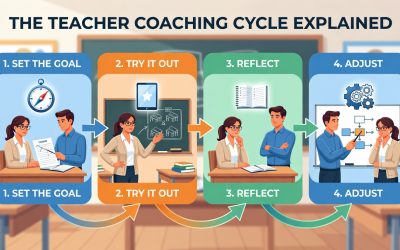
The Teacher Coaching Cycle Explained: Set Goal, Try, Reflect & Adjust
A simple evaluation won’t cut it. Teachers need support. That is a big difference, and good coaching gets it.
Imagine this. A teacher walks into a feedback session feeling judged. She shuts down. But when a teacher walks in feeling coached and supported, she opens up. Actually, tone changes everything. Good coaching creates that second kind of situation. It is the type of conversation that leaves the teacher feeling energized. Not the other way around.
The coaching cycle around here consists of four simple steps: set a goal, try it, reflect, and adjust. That’s it. But every single step is extremely important.
Set the Goal
This is where everything starts. The coach and teacher sit down together. They figure out where the teacher is right now. Not in a “you’re failing” kind of way. More like a map-it-out conversation: where are you now, and where do you want to go?
They look at a shared rubric or framework. This gives everyone a shared language. Then they figure out where the teacher stands. Are they just starting out? Somewhere in the middle? Or have they gotten pretty good at it? From there, they pick one clear goal. One. Not five. Not a long list of things to fix. Just one thing to focus on. It also helps to schedule the next check-in right away. That way, the goal doesn’t drift off and get forgotten.
Try It Out

This step is all about action. The teacher proceeds with their action plan. They will test a new strategy or tool, or change their classroom approach.
However, before jumping in, the coach and teacher discuss possible barriers. They will narrow their action plan to address only matters within the teacher’s sphere of control. No blame, no venting about the system. Just practical stuff they can act on. If a teacher starts to blame their students or head down a bad path, the coach gently steers the conversation back. A simple question like “What could you do differently in that moment?” works way better than letting frustration run the show. Coaches use little phrases called sentence stems for exactly this. They redirect the talk and keep things moving in a good direction.
Some teachers feel lost or low on energy. That is fully normal. A coach who asks the right questions can help uncover the heart of the problem. Then they can face it together and find a way through.
Reflect
After getting your hands dirty, it is time to stop and analyze what went down. What do you take away from what went well? What did not go anywhere? What was the unexpected takeaway? These are all valid questions.
This is the stage where real potential for growth is activated. The teacher narrates what they observed. The coach is quiet and poses questions to the teacher that trigger deeper thinking. There is no Number One or Number Two, or even Grading. There are no positions, just two colleagues wanting to get to the bottom of the matter. This also helps teachers to reconnect with their “why” again. Why did they step into teaching? What matters most to them? That purpose can bring life back to a teacher who feels stuck or burned out.
Adjust
Now the teacher and coach figure out what to change. Maybe the goal needs a small tweak. Maybe the approach needs a fresh angle. Or maybe things went well, and the teacher is ready to push a little further.
This step might look like:
- Watching another teacher model a skill
- Co-teaching alongside the coach in the classroom
- Sitting in on a mentor teacher’s lesson
- Starting a brand new coaching cycle with a fresh goal
The teacher drives this step. The coach supports. The teacher says what they need and when they’re ready. No pressure. Just support.
Why This Cycle Works
Effective coaching alters the way teachers develop. This isn’t a form you fill out and submit at the end of the year. This is an ongoing dialogue. Every cycle is an improvement on the prior one. With time, the accumulation of growth becomes easier to identify.
Teachers often leave the profession when they feel unsupported. This cycle provides teachers the ability to set a goal, implement, reflect, adjust, and repeat. That is how long-term change takes place: one conversation at a time.

Email Boundaries for Teachers: Response Times, Templates, and Auto-Replies
Teaching is a lot. You give everything in the classroom and then go home to a full inbox that never seems to sleep. Does that sound familiar? Email can feel like a second job. But it does not have to be that way.
Setting email limits is one of the best things you can do for yourself. It protects your time. It also helps parents and colleagues know what to expect from you.
Set Your Response Time and Stick to It
Choose two times each day to read and respond to email. It’s best to divide it into morning and evening sessions. Be clear with others when they might get a response from you. This can even go in your email signature. A phrase like, “I respond to emails between 8 am and 4 pm on school days,” is perfectly adequate.
This is perhaps the easiest change you can make to your work life, and it can have a huge positive impact. When they see your schedule in your signature, they will learn to stop expecting replies in real time.
Use an Auto-Reply to Set Expectations

An auto-reply is like a little helper that works for you. It sends a message the moment someone emails you. You do not have to do a thing. A good auto-reply tells people:
- When you check emails
- Who to contact for urgent matters
- When can they expect a reply
Here’s a sample you could set up:
“Thank you for your email. I check my messages on school days at 8 am and 3.30 pm. I will respond shortly. If your matter is urgent, you can reach out to the school office.”
Email Templates Save You So Much Time
Templates are pre-written replies you can tweak and send fast. You do not need to start from scratch every time. You probably write the same emails over and over again. It could be about a parent asking about homework or perhaps a colleague asking about a meeting. Write a solid reply once and save it. Next time, just edit the name and a few details.
Some handy templates to have ready:
- A reply for after-hours emails. Send it the next morning.
- A message for parents asking about grades
- A response to last-minute meeting requests
- A note for days when you’re off sick or away
These save you brain power. And teachers need every bit of brain power they can get.
Log Off and Mean It
This one’s big. When your workday ends, close the email app. Do not just minimize it. Actually, close it. The emails will be there tomorrow. Your rest will not come back if you skip it.
Many teachers feel guilty about not replying right away. But here’s the thing: replying at 9 pm tells everyone you’re reachable then. Then they start to expect it. You train people by what you do. So train them well.
Talking to Parents About Your Email Habits
Start the year off right. Let parents know your email policy early on. At meet-the-teacher night or in your first newsletter, share your response time. Keep it warm but clear. Parents like knowing the rules. Most of them do not want to bother you at odd hours anyway.
If a parent sends a late-night email, your auto-reply handles it. You do not have to respond.
A Few Final Thoughts
Setting email boundaries does not mean you are unapproachable. It’s meant to help you show up as your best self during the times that matter most. Exhausted teachers cannot meet their students’ needs. Rest is part of the job, too.
Begin with baby steps. Choose one boundary for this week. Perhaps it’s setting up an auto-reply or checking email only twice during the workday. That one step can greatly impact your week.
You are entitled to a life beyond the classroom. Make sure to preserve that.

The Teacher Energy Budget: Protecting Your “Yes” for What Matters
You’re in front of your class again. This time, you’ve already explained this concept three separate times. You can feel it. That feeling of emptiness and dryness creeping behind the eyes. Not just tired. Empty.
73 minutes left in the class. Then a staff meeting. Then it’s time to grade. Tomorrow, you do this all over again.
You’re not failing. You’re out of energy. And it’s only February.
Most Advice Gets This Wrong
Almost all teacher wellness tips seem to neglect the fact that you have a limited amount of energy to draw from. As if simply implementing a better morning routine or sharpening your focus gives you the energy needed for everything. That’s simply not how energy works.
Take the example of money. You only have so much in your wallet each day. Every task costs some of it. When it’s gone, it’s gone. Your body does not care that you still have afternoon classes or a staff meeting waiting. Zero means zero.
Here’s a wild fact: teachers make around 1,500 decisions a day. More than surgeons. More than air traffic controllers. Every single decision pulls from the same pool. By afternoon, that pool runs shallow. This is not a weakness. It’s just how brains work.
February makes it harder because there are no holidays, no built-in momentum, and also no finish line in sight. Just cold days and tired kids who look just as worn out as you feel.
Your Energy Is a Budget

Everything shifts once you treat energy like a budget. You stop trying to run at full speed all day. You start asking better questions. What actually needs your best energy right now? What can wait?
Here’s how tasks break down by cost:
- Teaching a brand-new concept: high cost
- A tough parent conversation: very high cost
- Watching kids do independent work: low cost
- Sitting quietly during lunch: almost zero cost
The goal is to stop scattering your best hours across random tasks. Front-load the hard things when you have fuel. Save the easy and routine work for when you’re running low. The fact is that you’re not doing less. You’re just spending your energy where it counts.
Track It for One Week
Check in with yourself three times a day. Once before students arrive, once around lunch, and once after they leave. Rate your energy from low to high. Write down what you were doing at each check-in.
By Friday, you’ll see patterns. Maybe you crash right after lunch every single day. Maybe Wednesdays just wreck you. That’s not a character flaw. That’s data. Use it.
Build In Small Breaks
You cannot use up energy without recharging it, and small breaks count. Take a minute to do an independent activity sitting down. During class, go outside and get a breath of fresh air. During lunch, take a moment to eat, and don’t feel obligated to answer any questions.
These breaks are not considered lazy; they are a way for your body to slow your nervous system down after being on high alert all day. A small reset can help your body have a lot more energy later.
Low-Energy Days Still Count
On difficult days, consider student-led activities. Let your students do more of the work. More group activities. More practice. More review of things they have already learned. You’re still present. You’re still teaching. You’re just doing your best with what you have.
That’s how you conserve your best “yes” for the moments that truly deserve it. And to be honest, that’s how you survive until June.

Parent Communication Without Stress: A Simple System + Message Examples
No one ever sat me down in college and said, “Hey, talking to parents is half your job.” Not once. I walked into my first classroom at 22 with zero clue how much parent stuff would eat up my time. I looked about 14, felt about 12, and honestly had no plan.
Next was my first angry parent. It was a lot. I’ll save you the details, but it involved a voicemail I was definitely not prepared for. At that moment, I knew I needed to change something.
The good thing is you don’t have to make the same mistake. I did that for you. After many years of hit-or-miss, I created a very simple system that actually works. It keeps parents happy, keeps you stress-free, and saves you from the anxiety of getting a new email in your inbox.
Start Strong: Build the Relationship Early
Don’t wait for a problem before you talk to your parents. That’s the biggest mistake most teachers make. By the time trouble shows up, you’re already a stranger to them.
Learn parent names from day one. Show up to orientation. Send that extra email to get them to Back-to-School Night. Go the extra mile early. Honestly, it pays off big time when you need parents on your side.
If you teach a tough or advanced class, set up quick parent chats in the first few weeks. Just to say hi. Just to connect. It sounds like a lot of work upfront, but those short conversations save you hours of stress later.
Show Them You Care About Their Kid
Parents love anyone who loves their child. Simple as that. Watch a student play in a game or perform in a show. Stay to the end if you can. Say hi to your student. That one moment does more for your bond with their parents than ten emails ever could.
You’ll probably run into the parents at the event too. Bonus points. Even if you don’t, word gets around. Other parents talk. Admin notices. It shows you care about students as full people.
Set Up a Mass Communication System
Pick one system. Stick to it. That’s really the whole secret here.
It could be:
- A simple class website you update each day
- A short Friday email with a bulleted list
- A text reminder app
- A broadcast through your school’s learning system
What matters is that you send it every week without fail. If a parent says you didn’t keep them in the loop, point it out. Admins love this too.
Reach Out to Every Parent Once a Month
Yes, every parent. No, it’s not as bad as it sounds. Keep the emails short. Two or three sentences max. And here’s the key part: share good news.
Parents brace for the worst every time they see a teacher’s name in their inbox. Flip that. Email them about something their kid did well. A great question, they asked. A big effort they put in. Something real and honest.
When you do this often, two great things happen. Parents start to trust you. And when you do have to share bad news, they actually listen. Keep a simple log of who you’ve emailed and when you emailed them. Every Friday after your mass email goes out, fire off four or five quick individual ones. Done in twenty minutes.
Meet Face to Face at the First Sign of Trouble

Ask to meet in person as soon as you spot an issue. Don’t wait. Don’t try to fix it all over email. A real conversation does what email simply can’t.
You can show the parent the student’s work. Walk them through a test. Point to your tutoring hours on the wall. Tone gets lost in email so fast. A real chat clears all of that up in minutes.
Do this early in the year. You should only ever need to do this once. After this, each email or phone call is waaaay easier because they already know your face and your heart.
Quick Message Examples to Use Right Now
Here are a few short emails you can copy today:
Positive check-in: “I just wanted to let you know that [name] had a really strong week. They asked a great question in class today that showed real depth. You should be proud.”
First issue outreach: “I noticed something with [name] I’d love to talk through. Could we set up a quick meeting? I’d love to find the best path forward together.”
Monthly update: “[Name] has been showing great effort lately. I see real growth and just wanted to share that with you.”
Short. Warm. Honest. That’s the formula. Build the habit, keep things simple, and you’ll stop dreading your inbox for good.

Why Every Teacher Deserves a Coach
Introduction to Instructional Coaching
The modern educational environment demands advanced levels of complexity and high workloads for teachers. The modern teaching environment has revealed that every educator needs access to a coach who supports their professional development. Instructional coaching is a professional development approach that supports teachers in achieving their excellence goals.
Instructional coaching is a modern professional development approach that provides tailored strategies to advance teacher development. Coaching provides continuous, customized support to teachers, unlike single-event workshops or seminars. This personalized approach gives educators guidance that directly applies to their classroom practices, making it an efficient way to improve teaching performance and student achievement.
Professional Growth Through Coaching
Professional growth represents the main reason why each teacher should have access to a coach. Studies demonstrate that teachers who receive instructional coaching experience enhanced performance, improved curriculum development, and stronger capabilities to assess their lessons for improvement. Teachers who work hand in hand with a coach can expand their instructional skills and master the best teaching methods and learning principles. The ongoing improvement process benefits teachers directly and directly affects student academic outcomes.

The coaching process enables teachers to develop critical self-analysis skills and reflect on their own thinking. John Dewey explained that people learn from their reflection on experiences rather than learning from experiences themselves. The high-speed nature of classrooms creates conditions in which teachers regularly miss opportunities to step back and reflect on their instructional methods. A coach develops purposeful reflection sessions that enable teachers to recognize their development opportunities and accomplishments, and to establish targets for professional advancement. Reflective practice remains vital because it fosters growth mindsets and enables educators to learn continuously.
Combating Isolation and Burnout
Implementing coaches for every teacher is necessary to combat teacher isolation and prevent burnout. Teaching operates as a single occupation because educators commonly work alone in their classrooms. School culture benefits from coaching because it helps teachers build stronger professional relationships, leading to increased collaboration and support among colleagues. Teachers who work with coaches gain access to peer support that helps them overcome feelings of isolation and develop through mutual sharing of work-related challenges and achievements. Establishing community and shared educational goals improves teacher job satisfaction and reduces teacher turnover, a trend that becomes more significant given that one-third of teachers leave the profession within their first five years of qualification.
Bridging Theory and Practice
Instructional coaching serves as a vital tool that connects educational theory with classroom practice. The application of classroom knowledge is a primary benefit of coaching, as it provides teachers with targeted support for using the knowledge they have acquired in their educational environments. High-quality professional development does not guarantee sustainable, meaningful teaching changes when exposure is limited to short-term sessions. Coaching provides sustained support that helps teachers implement new strategies effectively, turning professional learning into concrete changes in their teaching methods.
Impact on School Culture and Climate

Coaching produces substantial changes that transform the overall culture and climate of educational institutions. A school-wide implementation of coaching establishes a common teaching and learning approach throughout the institution. The combined emphasis on development creates a stronger school culture that unites teachers in their commitment to excellence. Schools that welcome coaching into their culture experience teachers who work together through resource sharing and mutual support for professional growth.
Benefits for Students
Coaching delivers advantages that surpass those of individual teachers and directly benefit their students. When teachers receive effective coaching, their students show improved learning outcomes while the achievement differences between students decrease. The indirect impact of coaching on students stems from improved teaching methods and enhanced teacher effectiveness, resulting in customized, high-quality instruction for each student. The teaching method requires special attention for disadvantaged students who risk academic regression due to poor instruction.
Effective Implementation of Coaching Programs
Implementing coaching programs requires careful planning, as their benefits are well established. School leaders are responsible for creating environments that support the flourishing of coaching initiatives. The implementation process requires schools to select qualified coaching staff, develop tailored coaching methods, and assess the impact of coaching on educational outcomes. Coaching must be introduced to teachers using a growth-mindset approach, demonstrating that all instructors, regardless of experience level, can enhance their abilities.
Coaching programs implemented in schools yield financial benefits for their operations. Schools should use their existing staff members through peer coaching programs rather than spending money on costly workshops or seminars that deliver short-term results. This method produces enduring improvements while developing school members’ capabilities.
Conclusion
Research findings demonstrate that every educator needs to have access to a coaching professional. The practice of instructional coaching is an effective mechanism that helps teachers develop their skills and improve their teaching methods, leading to better student achievement. The sustained, personalized support teachers receive through coaching helps resolve the numerous educational barriers they encounter in modern, complex school systems. According to Atul Gawande, the most effective human performance intervention is coaching when delivered effectively. Schools must understand coaching’s transformative power and ensure that every teacher has access to this essential resource. Educational success for our students depends on coach development for every teacher in our educational system.

Building a Professional Support Network as a Teacher
Teaching as a profession demands that educators continuously learn while demonstrating creativity and resilience. Educators dedicate themselves to student development, yet they often neglect creating professional support systems for their own needs. The network proves essential for teachers to address teaching challenges and learn best practices while ensuring wellness in their personal and professional lives. If you want to advance your career and improve student outcomes, build and use strong professional networks as described below.
Why Teachers Need a Support Network
In the teaching profession, educators work alone in most situations, managing their classrooms independently. The negative effects of isolation become burnout and stagnation unless teachers find ways to address these issues. A professional support network enables teachers to connect with peers who understand their workplace difficulties and share knowledge and emotional support through mutual resources.
The network exists to help teachers get assistance, but it also enables them to support others. Contributing to an educator community enables teachers to improve their capabilities, gain fresh perspectives, and develop leadership competencies.
Identifying Potential Network Members

Professional network building requires finding members who can advance your teaching expertise. These may include:
Colleagues: Teachers from your own department and school can immediately help you by drawing on their experience in your shared educational environment.
Mentors: Experienced educators who understand your situation can provide mentorship and professional guidance to help you grow.
Professional Associations: Local and national teaching associations offer educators from diverse backgrounds the opportunities to attend workshops and conferences while sharing ideas through online forums.
Online Communities: Educational social media networks, together with teacher-specific online communities, enable educators to establish global connections through which they can exchange teaching materials and best-practice insights.
Strategies for Building Your Network
Building a professional support network requires deliberate action and active involvement on your part. Building a robust professional network requires you to follow these specific strategies:
Attend Professional Development Events: Educational conferences, seminars, and workshops are ideal settings for educators to meet peers and discover innovative teaching approaches.

Join Online Forums and Groups: Share teaching resources by joining social media groups or online forums designed for educators who want to connect with peers worldwide.
Volunteer for School Initiatives: Participation in school-wide initiatives through committees helps teachers develop friendships within their staff and prove their leadership abilities.
Host or Participate in Peer Coaching: Teaching practices develop through peer coaching sessions, where you receive feedback and support for professional development.
Benefits of a Professional Support Network
When teachers establish strong professional relationships with peers, they gain multiple advantages that improve their professional experience.
Emotional Support: Sharing teaching experiences with colleagues helps teachers cope with their emotional workload and stress levels, thereby reducing their sense of isolation at work.
Professional Growth: Working with colleagues enables you to discover modern educational methods and technological tools that enhance your teaching.
Resource Sharing: The exchange of educational content between network members allows them to save time while improving their teaching effectiveness through shared lesson plans and materials, and innovative approaches.
Career Advancement: Professional relationships within strong networks will advance your career by allowing you to connect with influential administrators and educators.
Maintaining and Expanding Your Network
Building and expanding your professional support network takes ongoing effort after it’s established. The following methods will help your network stay both prosperous and beneficial:

Regular Communication: Network members should maintain contact through emails, meetings, or online group discussions to sustain active relationships.
Reciprocity: You should provide your network members with help and resources to develop a system of shared support.
Continuous Learning: Continuous professional development helps you maintain current best practices so you can share new knowledge with your network members.
Mentorship: Mentoring new teachers helps you provide community support and build leadership skills.
The Impact on Student Success
A professional support network produces an important yet roundabout influence on student success rates. Educational institutions that support their teachers by motivating them and providing access to modern teaching methods create conditions that enable teachers to deliver better learning experiences.
Educational success improves when teachers create collaborative spaces that foster adaptable lessons that address diverse student needs while boosting classroom involvement. When teachers receive support and professional value, they tend to remain in their careers, which helps maintain student continuity.
Conclusion
Teachers need to build professional networks to advance their careers and improve student learning outcomes. Professional growth opportunities, including peer connections and mentoring relationships, as well as participation in organizations, enable educators to access resources and emotional support for their career development. The development of these networks will be critical for future educational institutions because they create collaborative classrooms, support teacher motivation and retention, and foster student inspiration. Educators who focus on professional networking will drive positive change that supports both their development and student success.

Teacher, Heal Thyself: Emotional Wellness Strategies for the Classroom Hero
Educational institutions widely consider teachers heroes because they invest their time in developing students and molding the next generation. Teaching as a noble profession requires teachers to address a range of challenges, including classroom management and providing emotional support to students. When teaching professionals fail to address emotional demands properly, they risk developing burnout symptoms. The paper investigates methods that teachers can use to safeguard their emotional wellness while maintaining their role effectiveness.
Understanding Teacher Burnout
The prolonged effect of stress leads teachers to experience emotional, mental, and physical exhaustion, which defines burnout. Teachers develop burnout due to overwhelming workloads, insufficient resources, and the emotional strain of supporting students. Typical burnout symptoms include extreme tiredness, increased moodiness, performance decline, and a sense of detachment from reality. Identifying burnout symptoms early enables educators to prevent their progression.

Prioritizing Emotional Wellness
Maintaining both a productive teaching career and good health depends on emotional well-being. Teachers need to develop emotional intelligence by managing their emotions, building resilience, and maintaining a positive perspective. Teachers can achieve this by:
1. Practicing Self-Care: Activities that offer relaxation and joy, including reading, walking, and yoga practice, help teachers decrease their stress levels while recharging their energy.
2. Setting Boundaries: Teachers need to create distinct divisions between their professional duties and their personal time. Teachers need to set boundaries for work-free time and communicate them to both colleagues and students.
3. Building Support Networks: When teachers want emotional support, they should reach out to colleagues or relatives who have experience with teaching challenges.
4. Engaging in Mindfulness: The practice of meditation alongside deep breathing enables people to reduce their stress levels and maintain better concentration. People can use these methods in both their personal and professional lives.
Mindfulness in the Classroom

The practice of mindfulness delivers advantages to both teaching staff and their students. Educational lessons that include mindfulness exercises help teachers build students’ emotional intelligence and enhance their attention span. Teachers can establish a peaceful learning environment through daily practice of simple mindfulness exercises, which include body scans and guided breathing.
Creating a Supportive Classroom Environment
Teachers, alongside their students, need a classroom environment that provides support. The educational environment can be fostered by educators who establish mutual respect, encourage open communication, and honor student achievements. Such educational practices simultaneously boost student involvement and foster productive work environments for teachers.
Seeking Professional Development
The process of continuous learning remains vital for teachers to achieve professional satisfaction. Educational institutions should organize workshops and conferences that teach emotional wellness techniques alongside stress management skills and modern teaching practices for teachers. Educational opportunities give teachers new perspectives that improve their teaching and help them connect with educators facing similar challenges and goals.
Advocating for Systemic Change
The complete solution for teacher burnout needs systemic changes to supplement personal coping methods. Through union membership and collaboration with administrators, teachers can successfully advocate for improved resources, reduced class sizes, and fair wages. By promoting the significance of teacher well-being, institutions become motivated to establish supportive policies.
Overcoming Challenges to Emotional Wellness

1. Finding Time: Every teacher who works at a fast pace can dedicate a short period each day to personal care. A person can begin their mindfulness practice through brief sessions of only one to two minutes at first.
2. Skepticism: Educators who doubt mindfulness practices can overcome their skepticism through a brief personal experience of these techniques.
3. Support from Colleagues and Administrators: A school-wide emphasis on emotional wellness creates organizational support that helps teachers sustain their practice.
Implementing Emotional Wellness in Schools
School environments have great potential to foster emotional well-being among teaching staff. Schools can foster a supportive environment of resilience and well-being by implementing wellness programs during professional development or through mindfulness workshops. Efforts to promote emotional wellness have positive effects on teachers and their students, leading to improved learning conditions.
Conclusion
Teachers must focus on emotional wellness because it enables them to keep their teaching effectiveness while preserving their teaching passion. Educators who prioritize self-care alongside boundary-setting, network-building, mindfulness practice, and systemic advocacy will safeguard their well-being while achieving career success. Emotional wellness focus among teachers enables them to provide better student support and establish an active learning environment that benefits both educators and students. The educational system becomes healthier and more effective when educators implement this approach. Educators who adopt emotional wellness methods will sustain their meaningful work contributions while maintaining a healthy balance in their personal lives.